Innovation and education commentary for parents, educators, and adult learners.
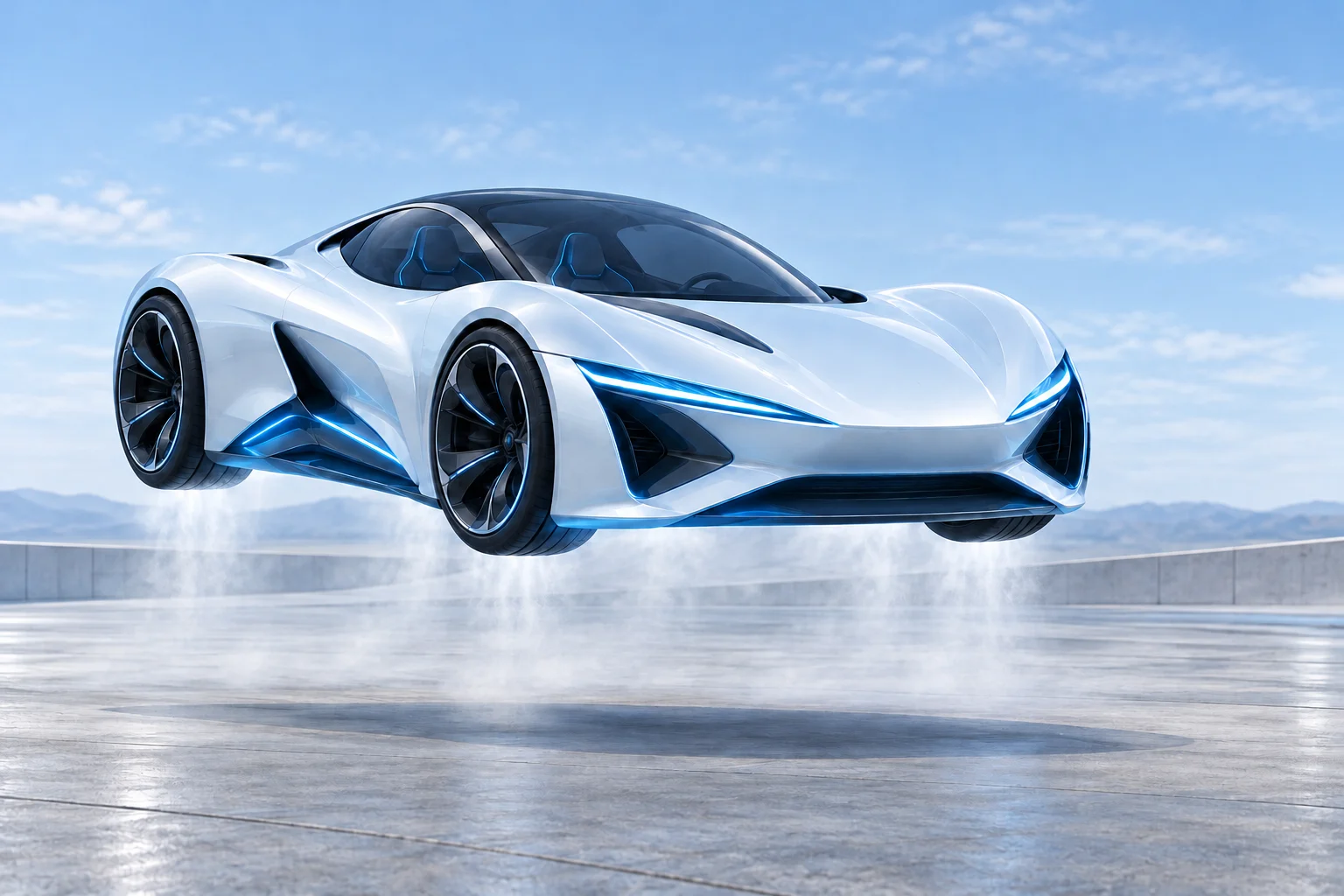
As a child, I dreamed of flying cars. The Roadster prototype demonstration brings that childhood dream back to me—not as a promise that we can now fly to work, but as a reason to wonder what children today might learn to create. For me, the hopeful question is how we help an unusual idea grow through learning, testing, and revision.
By October 27, 2026, Elon Musk’s October 15 Roadster post displayed 79.3 million views on X, observed at approximately 15:25 UTC. Musk’s original post. This is a snapshot of the post-view counter, not a completed-video-view count; X explains that repeated views can count, so it does not represent 79.3 million different people. X’s explanation of view counts
Associated Press reported brief airborne maneuvers during Tesla’s October 15 demonstration. The display did not establish the arrival of an ordinary flying commuter car. AP’s October 16 report
The distinction becomes clearer in Tesla’s own materials. Its product page describes the Rocket variant as single-seat and invite-only, and states that it is not approved for public road use. Tesla’s October 21 quarterly update lists the Roadster’s manufacturing status as design development. Those qualifications belong beside the spectacular images, not out of sight beneath them. Tesla Roadster page · Tesla’s October 21 update, manufacturing table
How did others respond?
AP quoted legal scholars David Vladeck questioning road-use approval and Bryant Walker Smith challenging public-road availability. These are two attributed responses, not a measure of public opinion. AP’s reported reactions
For parents, the story offers more than a debate about one company. It provides an opportunity to consider how we respond to a child’s unusual idea, and how we might help them explore the work between imagining something and making a first version.
Let curiosity become a better question
The first reaction to a dramatic demonstration may be excitement, disbelief, or dismissal. A useful educational conversation can begin before anyone settles into one of those positions.
In my classroom observations, questions, discussion, and how teams are composed can be more engaging than passive lecture. This news suggests a discussion with plenty of room for different perspectives: what did the demonstration establish, and what remains uncertain?
A learner interested in engineering might focus on the vehicle’s movement. Another might consider the experience of a passenger or someone nearby. A third might notice the language used to describe the demonstration. Each perspective can help the group examine a different part of the story.
The aim would be to make observations precise enough that people can disagree productively. “That is amazing” and “that will never work” both leave considerable thinking unfinished.
Separate the demonstration, the product, and its purpose
Three questions can help organize that thinking.
What was demonstrated? Describe the observed or reported action as narrowly as the evidence allows. In this case, the relevant distinction is between a brief airborne maneuver and the much broader image of routine travel through the air.
What would a usable product require? A classroom discussion could identify questions about repeatability, operating conditions, maintenance, human control, and the evidence needed to assess safety. These are areas to investigate, not an attempt to certify a vehicle from a video.
What purpose would it serve? A technical achievement can invite a separate conversation about intended users, practical value, and effects on other people. Participants may reasonably reach different conclusions about those questions.
Keeping the three stages separate makes space for both imagination and scrutiny. Someone can recognize a demonstration’s ingenuity while remaining uncertain about its eventual usefulness. Someone else can question the product’s purpose without denying that the engineering deserves examination.
A large audience cannot answer those questions
The post’s visibility is part of the news. Its view counter cannot tell us why someone encountered it, what they understood, or whether they accepted the claims surrounding it.
For a family or classroom discussion, try separating two tasks. First, identify what makes the post compelling: the image, the surprise, the caption, or the familiar idea of a flying car. Then identify what additional information would help evaluate the technology.
This exercise gives attention and evidence different jobs. The dramatic image can motivate an investigation. The investigation still needs sources, context, and questions that the image cannot settle.
It is also a useful habit when examining AI demonstrations. Rather than assuming that one impressive example establishes a system’s general ability, learners can ask which task was shown, under what conditions, and what further evaluation they would want. That is an analogy about evaluating technology, not a claim about AI’s technical role in the Roadster demonstration.
Imagine the next version on paper
To bring the prototype-to-product distinction closer to everyday life, try a small paper-design activity. There is no need to imitate the vehicle or its stunt.
Choose an ordinary inconvenience, such as returning borrowed classroom materials. Sketch a device or service that could help. Give the idea a name and explain its most appealing feature in one sentence.
Then invite someone else to describe using it on an ordinary, imperfect day. Perhaps an item is missing, a label is misunderstood, or two people need the service at once. The designer listens before changing the sketch.
In a group, participants could take turns considering the first-time user, the person maintaining the system, and someone who needs a different way to access it. These are perspectives to investigate; role-play cannot substitute for listening to actual users.
Finish with a short presentation containing two things: the feature that still excites the team and the next test it would conduct. The goal is to give an imaginative idea somewhere to go after its first successful demonstration.
This is a proposed discussion activity, not a tested intervention or a report of classroom results. It keeps the creative invitation open while making the work of refinement visible.
Keep room for the unfinished idea
An ambitious prototype does not need to answer every question immediately to deserve attention. Its limitations still need to remain visible when we discuss it.
For learners, the valuable move is from admiring a result to identifying the next question. What needs testing? Whose perspective is missing? Which conclusion would change if new evidence appeared?
That approach allows curiosity to continue after the spectacular moment has passed. It also treats questioning as part of creative work: a way to develop an idea more carefully, rather than merely applaud or reject it.
Two questions to carry forward
- How could you respond to your child’s next “What if?” in a way that keeps their curiosity alive while helping them choose one question to investigate?
- What small, safe test could your child design for an everyday idea, and what result would make them want to change the design?
Sources
- Elon Musk, X, October 15, 2026. Original Roadster post. Displayed counter observed October 27, 2026, approximately 15:25 UTC: 79.3 million views. This is a changing post-view metric, not a unique-person or completed-video-view count.
- Associated Press, October 16, 2026. Roadster demonstration report.
- Tesla. Roadster product page. Product descriptions and Rocket-variant limitations checked October 27, 2026; company statements are attributed as such.
- Tesla, October 21, 2026. Third Quarter 2026 Update, attached to Form 8-K. See the manufacturing table on report slide 6, PDF page 9, listing Roadster under design development.
- X Help Center. View counts. Explains that multiple views from the same person can count.